Our platform
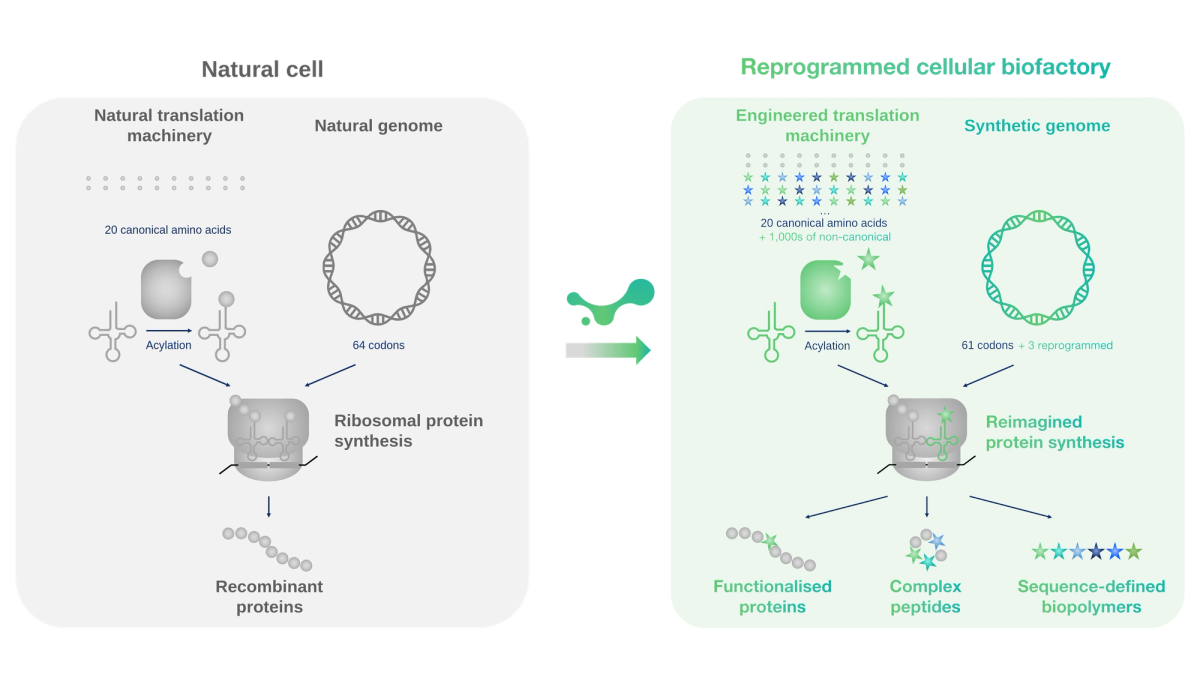
Constructive Bio’s genetic code expansion platform enables fermentation-based production of peptides and proteins containing hundreds of non-canonical amino acids.

Reprogramming cellular biofactories
Transform natural cells into programmable biofactories with expanded chemical capabilities.
Synthetic genomics
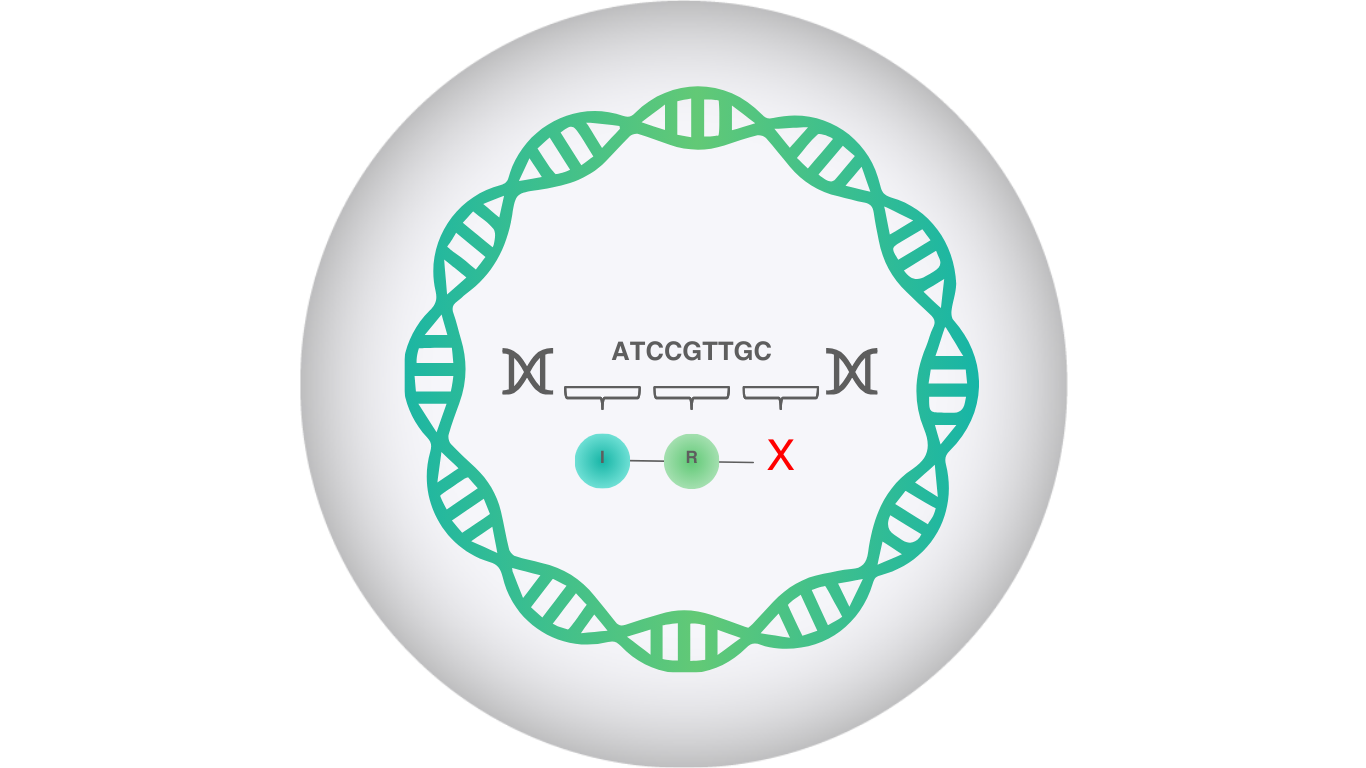
World-leading capability in whole genome synthesis. We design and build entire genomes from scratch, creating organisms with fundamentally new properties.
- De-novo genome design
- Codon compression & optimization
- Syn61 chassis development
- Genome-scale engineering
Engineered translation
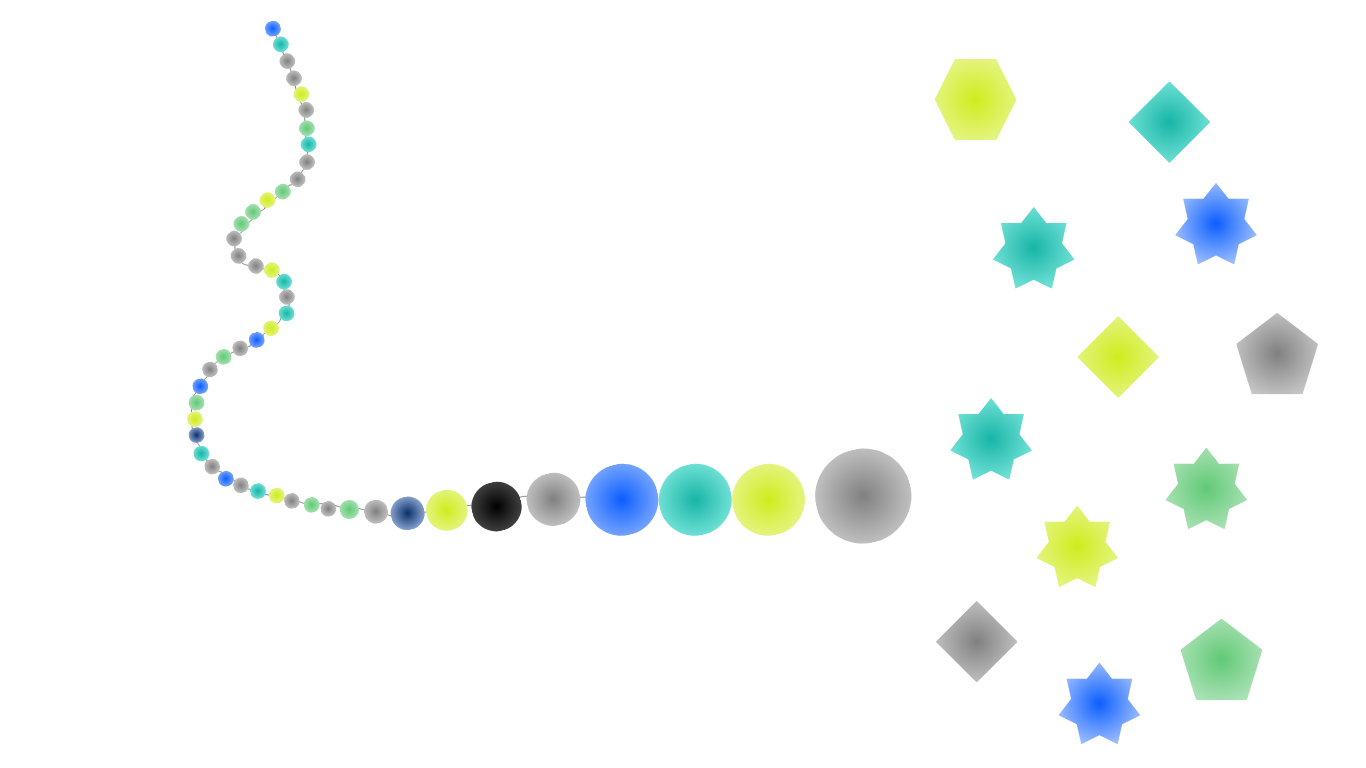
Expanded genetic code incorporating non-canonical amino acids. Biosynthesis of programmable polymers with precisely defined sequences.
- Non-canonical amino acid incorporation
- Expanded genetic code
- Sequence-defined biopolymers
- Site-specific modifications
Go deeper
The genome synthesis revolution
A four-step guide to whole-genome synthesis (design, build, assemble, test) for megabase-scale synthetic DNA enabling recoded organisms.
Read whitepaper →Genetic code expansion
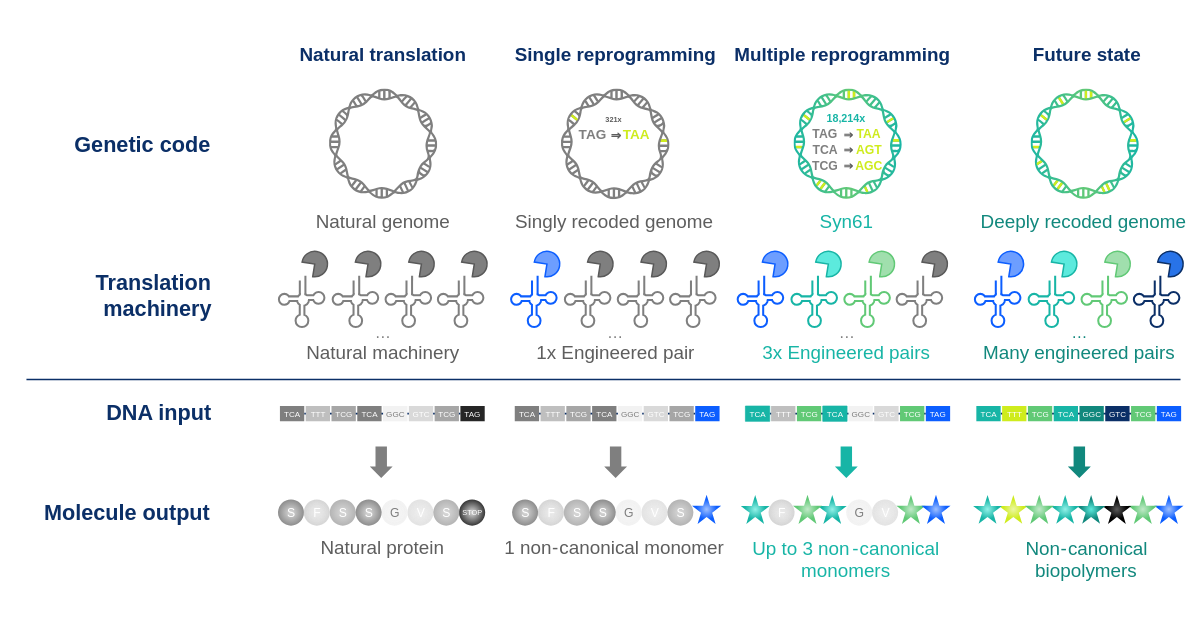
From synthetic genome to functionalised proteins with non-canonical amino acids
Go deeper
Reprogramming life: how genetic code expansion will redefine the bioeconomy
How compressing E. coli's genetic code from 64 to 57 codons frees triplet codons for non-canonical amino acids, enabling fermentation-based production of peptide therapeutics.
Read whitepaper →Platform advantages
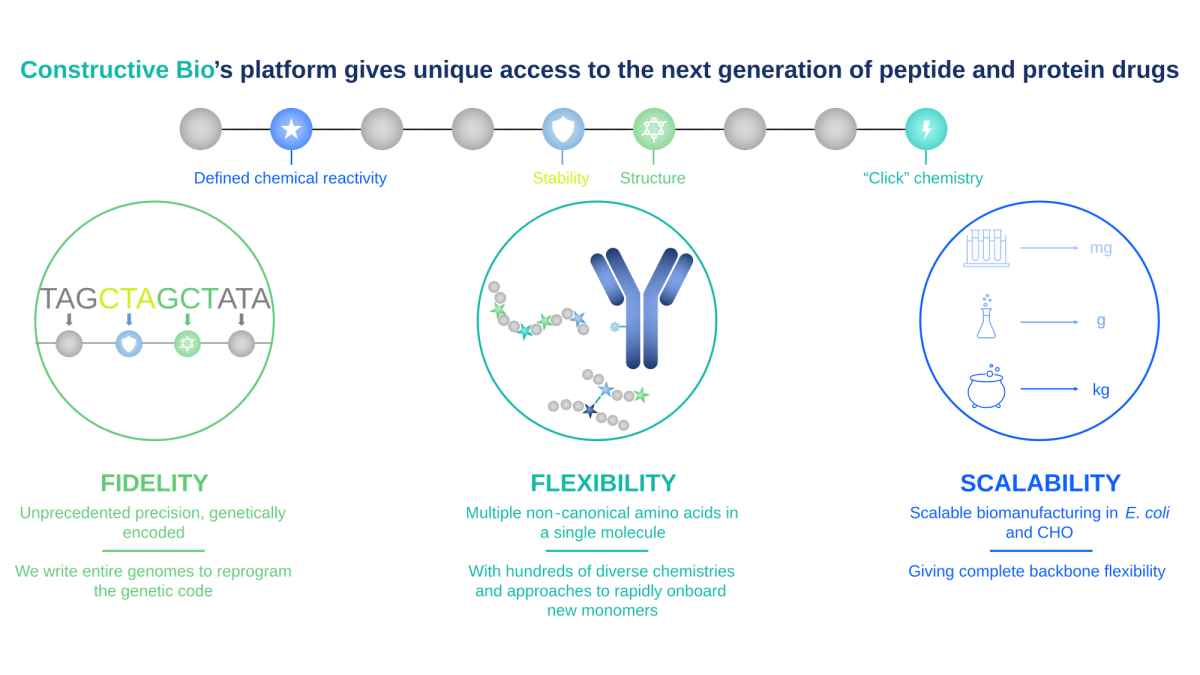
Enabling next-generation solutions
Creating valuable new-to-nature molecules through reprogramming complex biology in a sustainable, scalable and cost-effective way.
Writing recoded genomes
New cellular chemistry
Bioprocess with expanded cellular chemistries
Design of novel valuable molecules
Our Mission
To revolutionise the production of exotic and complex molecules by bridging the gap between biology and organic chemistry, enabling sustainable, scalable, and cost-effective solutions for a wide range of applications.
Our Vision
To become the programmable biomolecule company driving innovation and sustainability in an efficient, fast and cost-effective way.
Key publications
Total synthesis of E. coli with a recoded genome
Nature 569, 514-518 (2019)
Sense codon reassignment enables viral resistance and encoded polymer synthesis
Science 372, 1057-1062 (2021)
E. coli with a 57-codon genetic code
Science 390, eady4368 (2025)
Reprogramming the genetic code
Nature Reviews Genetics 22, 169-184 (2021)
Interested in our platform?
Let's discuss how our technology can accelerate your research and development.
Get in Touch →