Stable functional modifications
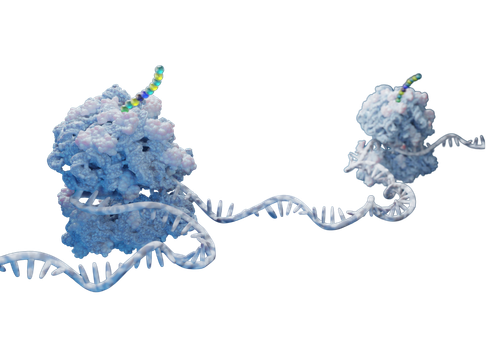
Post-translational modifications (PTMs) on lysine residues, including acetylation, succinylation, malonylation, and glutarylation, regulate protein function throughout biology. Studying them has been difficult because they are transient, heterogeneous, and hard to install site-specifically.
A non-canonical amino acid called MeOK acts as a universal precursor: once incorporated at a defined site, its masked hydroxylamine handle can be derivatised to generate any of a panel of lysine modifications. From a single MeOK-containing protein, researchers installed 11 distinct PTMs on ubiquitin, including malonylation, succinylation, glutarylation, and itaconylation, modifications previously inaccessible through genetic encoding (Knecht et al., 2025).
For therapeutics, stable PTM mimetics offer a way to lock proteins into specific functional states. Rather than relying on cellular enzymes to add or remove modifications (which creates heterogeneity), the modification is built in during production and remains permanent. This is valuable for producing homogeneous protein therapeutics with defined activity profiles.
Source publication
View source paper →Interested in ncAA-enhanced therapeutics?
Constructive Bio can incorporate hundreds of non-canonical amino acids via fermentation at scale.