


Engineering the future of biology with revolutionary genome synthesis and expanded genetic code technology.
Quinoline heterocycles
-
ncAA
β-keto/γ-keto -
Incorporation molecule
Peptides -
Impact
Quinoline heterocycles
Description
For decades recombinant peptides lacked the chemistry that makes small molecules win. Until now.
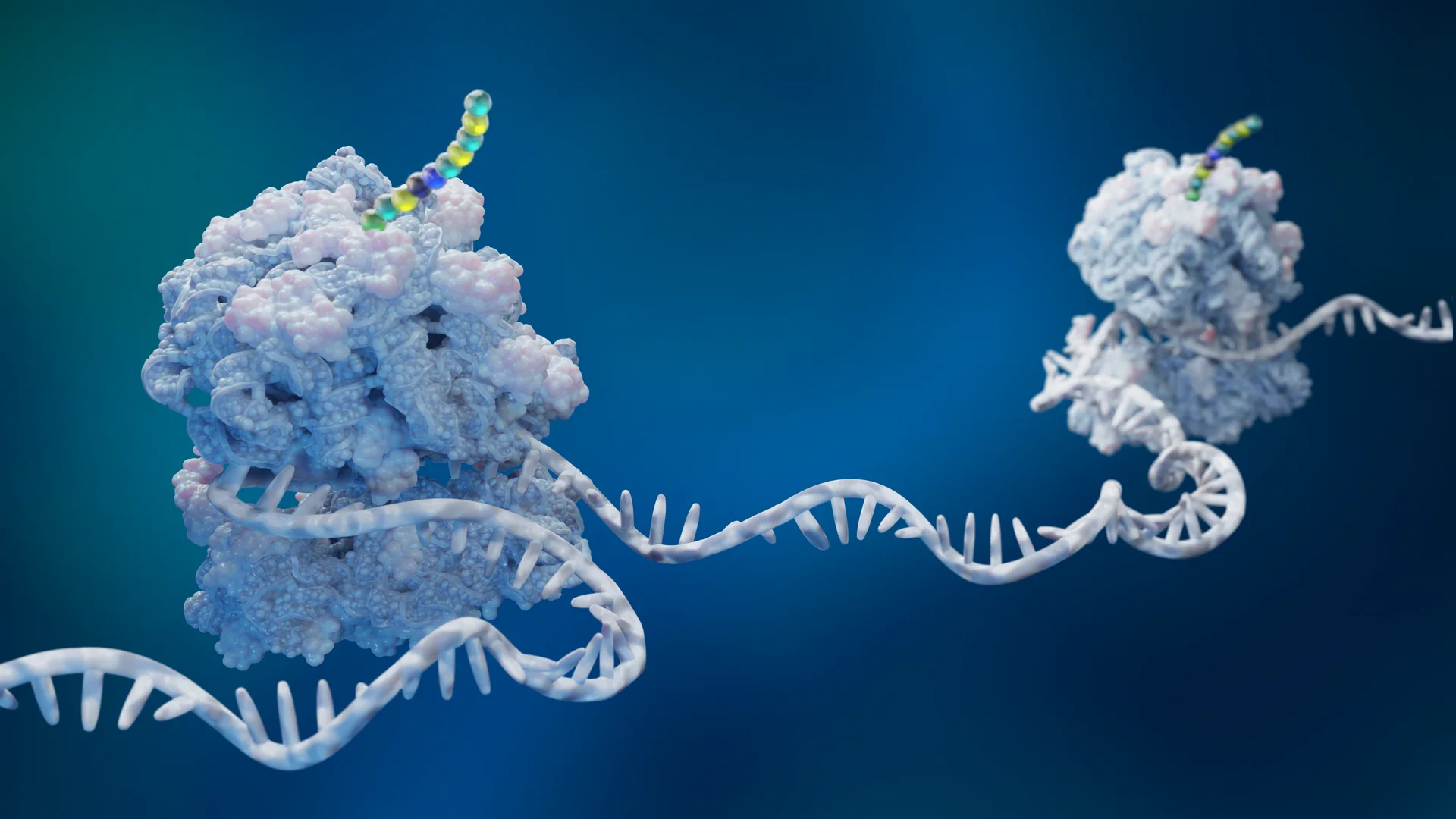
Using genetic code expansion, scientists installed β-keto and γ-keto ncAAs at the N-terminus of ribosomally translated peptides, using flexizymes. Then comes the magic: a mild Friedländer reaction that turns those handles into embedded quinoline heterocycles directly on the peptide. Real small-molecule pharmacophores, built by the ribosome. Quinolines form many FDA-approved small-molecule drugs but, until now, were absent from peptides. By encoding kynurenine-type ncAAs, the team drove intramolecular Friedländer macrocyclization, where the quinoline itself becomes the ring-closing element. The result is simple: trillion-member peptide libraries can now start life with real small-molecule pharmacophores already inside them.
Citation: Knudson et al., 2026
Quinoline heterocycles appear in numerous approved small-molecule drugs but have been absent from ribosomally produced peptides. Non-canonical amino acids bridge this gap by introducing small-molecule pharmacophores directly into genetically encoded peptide sequences.
By incorporating beta-keto and gamma-keto ncAAs at the N-terminus of ribosomal peptides, researchers enabled an intramolecular Friedlander reaction that builds quinoline rings directly within the peptide backbone. The quinoline itself serves as the macrocyclisation element, creating a hybrid molecule with both peptide and small-molecule character (Knudson et al., 2026).
This opens peptide libraries to chemical space previously exclusive to synthetic chemistry. Ribosomal display libraries up to trillion-member scale can, in principle, be designed with embedded drug-like heterocycles, combining the target selectivity of peptides with the pharmacological properties of small molecules. For drug discovery, it means screening larger chemical space faster, and for manufacturing, ribosomally produced peptides avoid the step-count limitations of total chemical synthesis.