Precise bioconjugation
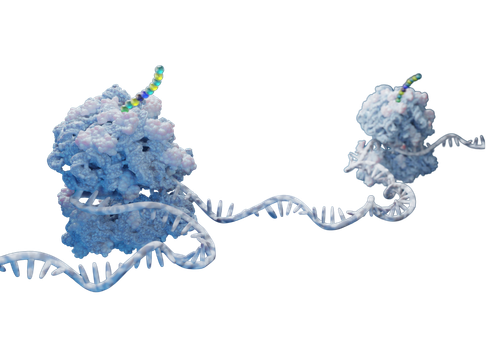
Site-specific bioconjugation means attaching molecules at a defined position on a protein, with controlled stoichiometry. Random conjugation methods produce heterogeneous mixtures that complicate manufacturing, analytics, and regulatory filing. A genetically encoded ncAA with a click-chemistry handle addresses this by providing a single, defined attachment point.
Researchers incorporated azidolysine (AzK) at a chosen site on AAV capsid proteins, then used click chemistry to attach an anti-HER2 nanobody. The resulting targeted AAV vector achieved a 19-fold increase in gene delivery to HER2-positive tumours in vivo, compared to unmodified AAV. The same approach worked with full-length trastuzumab (Pham et al., 2025).
Site-specific ncAA conjugation applies broadly beyond gene therapy: antibody-drug conjugates, PEGylation for half-life extension, fluorescent labelling for diagnostics, and multi-domain protein assembly. The common advantage is homogeneity, where each molecule is modified at the same site in the same way, simplifying manufacturing and improving batch consistency.
Source publication
View source paper →Interested in ncAA-enhanced therapeutics?
Constructive Bio can incorporate hundreds of non-canonical amino acids via fermentation at scale.