Architecture
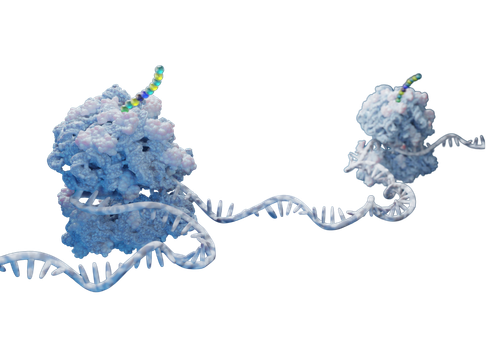
The spatial arrangement of protein domains, their architecture, determines biological function. In bispecific antibodies, how two binding domains are oriented relative to each other affects potency, selectivity, and manufacturing feasibility. Genetic fusions fix this geometry at the DNA level, offering limited flexibility.
Using p-acetylphenylalanine (pAcF) as a site-specific conjugation handle, researchers constructed anti-PD-L1 bispecific nanobodies with precisely controlled domain orientation. The defined architecture produced stronger immune activation within tumours, increased CD8+ T-cell infiltration, and delayed tumour growth in colorectal cancer models, compared to conventional fusion approaches (Hu et al., 2025).
The advantage is reproducibility: each molecule has the same connection point, the same geometry, the same stoichiometry. This translates directly to manufacturing, where homogeneous products simplify analytics, reduce batch variability, and streamline regulatory characterisation. ncAA-mediated architecture control is relevant wherever multi-domain proteins are used therapeutically.
Source publication
View source paper →Interested in ncAA-enhanced therapeutics?
Constructive Bio can incorporate hundreds of non-canonical amino acids via fermentation at scale.