New-to-nature geometries
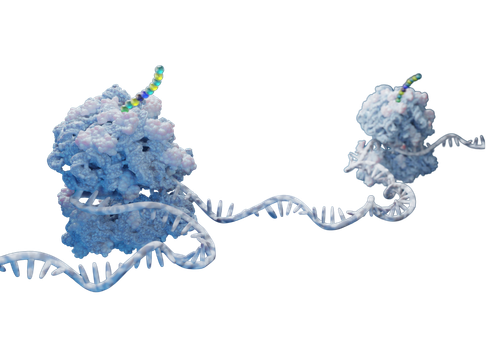
The 20 canonical amino acids offer a limited set of side-chain shapes. For targets that require precise geometric complementarity, such as protein-protein interactions in oncology, this limitation constrains drug design. Non-canonical amino acids provide access to molecular geometries that do not exist in nature.
In work targeting acute myeloid leukaemia resistance, researchers used ncAAs with rigid cyclohexyl side chains to optimise BH3 mimetic peptides against MCL-1 and BCL-xL, two anti-apoptotic proteins that drive resistance to venetoclax. Site-saturation mutagenesis with ncAAs achieved IC50 values of 2.77 nM (MCL-1) and 10.69 nM (BCL-xL), a fourfold potency improvement. The rigid side chains provided shape complementarity and hydrophobic packing that standard amino acids could not deliver (Wang et al., 2025).
This demonstrates a general principle: when binding affinity depends on geometric fit, expanding beyond the natural amino acid palette can access potency gains that conventional protein engineering may not reach.
Source publication
View source paper →Interested in ncAA-enhanced therapeutics?
Constructive Bio can incorporate hundreds of non-canonical amino acids via fermentation at scale.