Catalysis
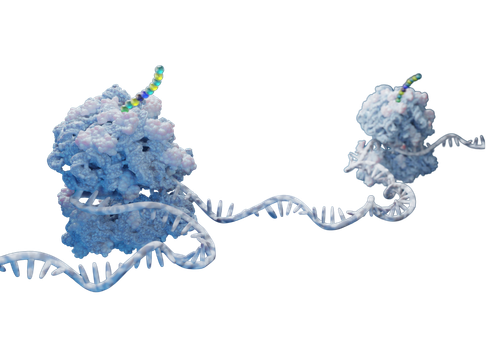
Artificial metalloenzymes combine the selectivity of proteins with the reactivity of metal catalysts. The limitation has been coordinating metals like gold, which require soft ligand environments that the 20 standard amino acids do not readily provide in a genetically controlled way.
4-mercaptophenylalanine (pSHF), an ncAA with a thiophenol side chain, addresses this by providing a genetically encoded soft metal-binding residue. Installed at a defined site in the LmrR protein scaffold, pSHF stabilises Au(I) in its catalytically active low-oxidation state. The resulting metalloenzyme performs pi-activation chemistry, the type of gold-catalysed reaction widely used in synthetic organic chemistry, within a protein framework (Veen et al., 2024).
This demonstrates that ncAAs can introduce entirely new chemical functionalities into proteins, not just modify existing ones. The combination of genetic encoding (for precise placement) and non-natural coordination chemistry (for novel reactivity) opens a design space that neither protein engineering nor synthetic chemistry can access alone.
Source publication
View source paper →Interested in ncAA-enhanced therapeutics?
Constructive Bio can incorporate hundreds of non-canonical amino acids via fermentation at scale.