Modular bispecifics
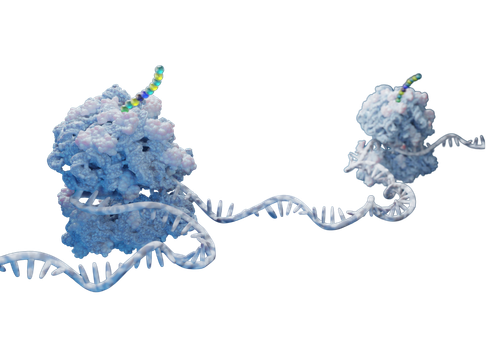
Bispecific antibodies engage two targets simultaneously, but conventional approaches (DNA fusions, knobs-into-holes) constrain geometry and complicate manufacturing. Non-canonical amino acids offer a modular alternative: each domain is expressed separately with an ncAA at a defined site, then assembled via click chemistry with full control over topology.
Using genetically encoded azidolysine (AzK) in nanobodies, researchers created bispecific constructs where the orientation and spacing between domains was a tuneable design parameter. Unlike genetic fusions, which lock in a single geometry at the DNA level, ncAA-mediated assembly allows the same domains to be connected in different configurations without re-cloning. The resulting constructs were homogeneous and manufacturing-friendly (Adomanis et al., 2025).
This modular approach reduces development timelines: once individual domains are validated, new bispecific combinations can be assembled chemically rather than requiring new expression constructs. It applies to nanobodies, single-chain antibodies, and other scaffold proteins.
Source publication
View source paper →Interested in ncAA-enhanced therapeutics?
Constructive Bio can incorporate hundreds of non-canonical amino acids via fermentation at scale.