Complete biosynthesis
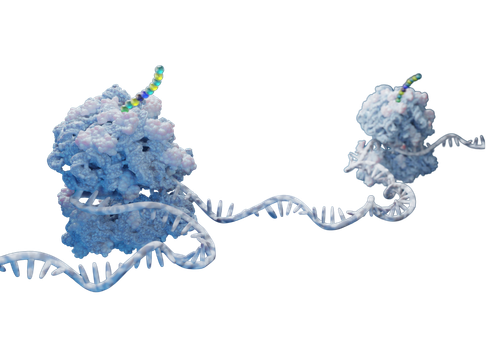
Complete biosynthesis means producing and incorporating a non-canonical amino acid entirely within the host cell, without external chemical synthesis or feeding. This removes a major bottleneck in ncAA production: the cost and complexity of synthesising and supplementing non-natural building blocks.
Researchers engineered E. coli to both synthesise S-(4-aminophenyl)-L-cysteine (pAPhC), a mercapto-aniline-containing ncAA, and incorporate it into proteins via genetic code expansion. The resulting designer enzyme catalysed enantioselective Friedel-Crafts alkylation with 95% enantiomeric excess and 98% yield. The catalytic chemistry performed by pAPhC does not exist anywhere in nature's amino acid toolkit (Huang et al., 2025).
This convergence of metabolic engineering and genetic code expansion points toward a future where recoded organisms produce their own non-canonical building blocks at fermentation scale. For Constructive Bio's platform, complete biosynthesis is the logical endpoint: cells that manufacture both the ncAA and the therapeutic molecule in a single fermentation run.
Source publication
View source paper →Interested in ncAA-enhanced therapeutics?
Constructive Bio can incorporate hundreds of non-canonical amino acids via fermentation at scale.