Cell permeability
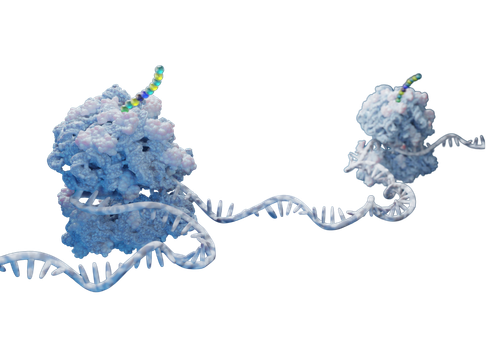
Most biologics work outside cells because proteins cannot cross the plasma membrane. Roughly 90% of the human proteome sits inside cells, beyond the reach of conventional antibodies and nanobodies. Non-canonical amino acids can change that.
In 2025, researchers genetically encoded beta-lactam-lysine (BeLaK) at the N-terminus of a fibronectin type III monobody. BeLaK spontaneously formed an intramolecular covalent bond with a nearby lysine, creating a structural "strap" that promoted cellular uptake. The modified monobody entered cells at just 40 nM concentration, escaped endosomes cleanly, and inhibited ERK1/2 phosphorylation at sub-micromolar levels in esophageal cancer cells (Rabb et al., 2025).
This single ncAA modification converts an extracellular binder into a cell-penetrating therapeutic. Similar scaffolds such as nanobodies and DARPins could in principle use the same strategy. For drug developers, it opens the intracellular proteome to biologic intervention without requiring cell-penetrating peptide fusions or lipid nanoparticle delivery.
Source publication
View source paper →Interested in ncAA-enhanced therapeutics?
Constructive Bio can incorporate hundreds of non-canonical amino acids via fermentation at scale.